
By
Andrew DeMarco
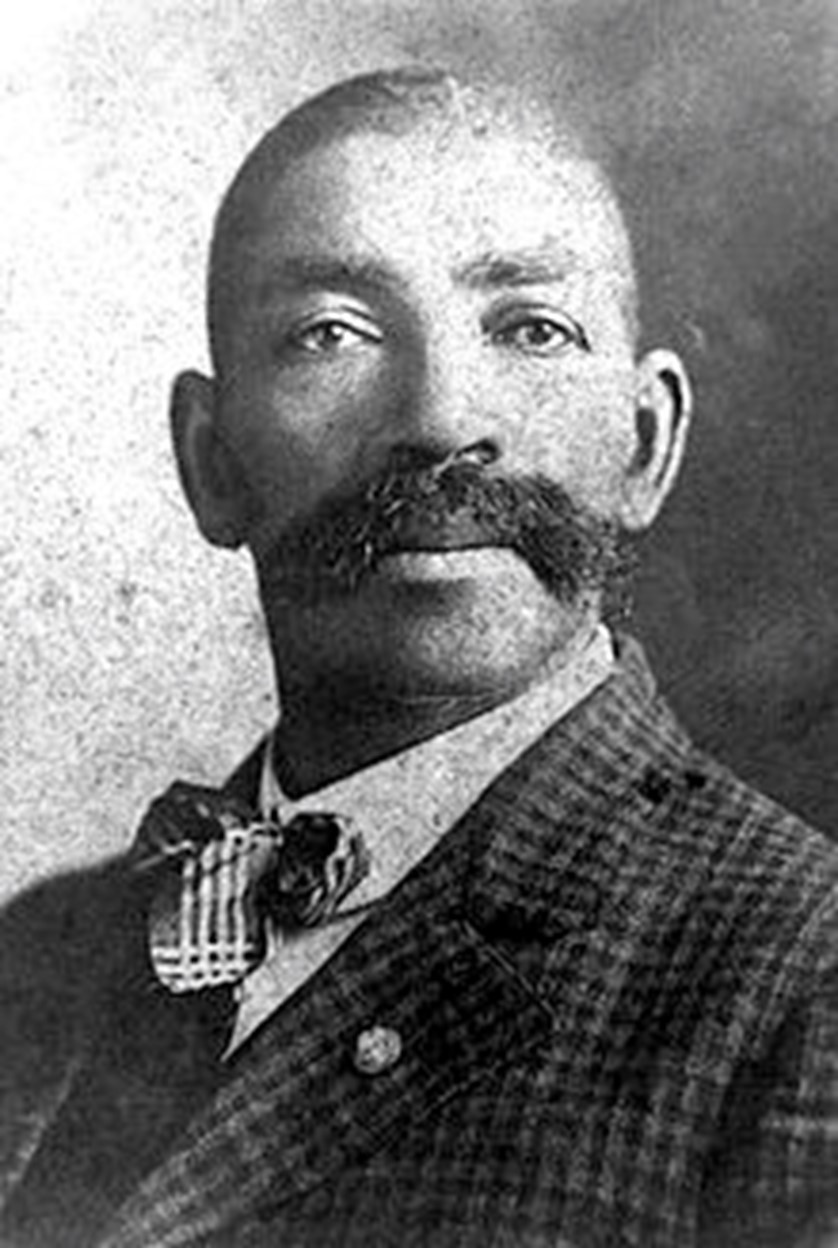
As is my custom during Black History Month, I will once again tell the story of one of the lesser-known African Americans. This time I have chosen to write about Bass Reeves.
Reeves was born in 1838 into a family of slaves in Arkansas who were owned by a state legislator named William Steele Reeves. During the Civil War, William Reeves’ son Colonel George Reeves fought for the Confederacy and retained Bass as a servant and took him with him. At some point, Bass escaped and fled to Indian Territory. Once there he became acquainted with the ways and customs of several Indian Nations, including the Creek, Cherokee and Seminole as well as others. He learned their languages, tracking skills and became adept with firearms. His marksmanship and ambidexterity enabled him to carry two side arms. He became a farmer and rancher until 1875 when he was appointed a U.S Marshall for the Indian Territories and served in other law enforcement roles for over 32 years.
He was an imposing figure standing six feet two inches tall, the lawman, who often donned a large hat, suits, polished shoes and two Colt Peacemakers at his sides. He patrolled 75,000 square miles of Indian Territory often with a Native American at his side to assist him. He made over 3,000 arrests and killed over 14 criminals in defense of his own life. After making these arrests, he left his “calling Card” which was a silver dollar. In a strange twist in 1902 Bass had to arrest his son Benjamin “Bennie” Reeves, who was charged with murdering his wife, Castella Brown. Bennie was convicted and found guilty by a jury on January 22, 1903, in Muskogee. In 1907 and nearly 70 years old, Bass became a member of the Muskogee, Oklahoma police department and was the only black officer in the department.
If his exploits sound familiar they should. It is believed that Bass Reeves was the inspiration behind the Lone Ranger. If you really look at it, you can see how that is very likely. A well-dressed man establishing law and order with his two six guns by his side along with his Native American Sidekick and leaving his calling card. Instead of a silver bullet he left a silver dollar.
Reeves was immortalized in popular media, including TV shows, films, novels, poems, and books. In 2011, the US-62 Bridge, which spans the Arkansas River between Muskogee and Fort Gibson, Oklahoma was renamed the Bass Reeves Memorial Bridge. In May 2012, a bronze statue of Reeves by Oklahoma sculptor Harold Holden was erected in Pendergraft Park in Fort Smith, Arkansas and in 2013he was inducted into the Texas Trail of Fame.
So, whenever I hear the “Wiilliam Tell Overture” I will not only think of the Lone Ranger but I will also give a nod to Bass Reeves. A man who overcame slavery and led a life dedicated to law and order and who became a legend and probably inspired another. I know that all this will give me that feeling that Cousin Bob would call that….. Rosy Glow.

 Bob's Rosy Glow